May 3, 2010

Visit to the Bullock's Permaculture Homestead

As the Alderleaf Certification Program moves towards a close, we have completed our final days of Permaculture. To celebrate our year of learning and practicing permaculture ideas and techniques we traveled to one of the oldest running permaculture farm in the country: the Bullock's permaculture homestead.

Our day started with a beautiful ferry ride into the San Juan Islands. The Bullock's homestead is located on Orca's Island, in Deer Harbor. The homestead is in a micro-climate within a micro-climate, being in a sunny part of WA state and on a sunny Southwest facing hillside. This incredible nearly 20 acre property is a shinning example of permaculture in action. It is impossible to capture in words all of the intricate systems, mind-boggling variety of plants of countless shapes, colors, smells and tastes that cover the land in a riot of diversity!

Doug Bullock was our host and tour guide for the day. His many years of experience around the world applying permaculture principles in places such as New Zealand, Hawai'i, Australia, Costa Rica, Nicaragua, California and Washington. His knowledge of plants and ecosystems from these and other areas is awe-inspiring.


Here Doug is pointing out the huge leaves of an edible plant from South America who's stems are chopped up and eaten raw. Plants at the Bullock's homestead grow abundantly, intermixed in to many different guilds. Plant guilds are a grouping of plants grown together for the mutual benefit of all. So that every species in a guild supports the other, making them all more vital, healthy and productive.


Here Doug leads us through one of several greenhouses on the property. Here many of the farms plants are propagated and plant cuttings are rooted to be sold or for planting throughout the property. The amount of food produced on the farm has to be seen to be believed.


Another gem of the Bullock's homestead is this (see photo above) several acre wetland. When the Bullock's purchased the property, the observed that there was an old drainage ditch coming out of a field. They quickly chose to dam the drainage and let the water pool up. In a short time, it turned into a wetland which they helped along with planting a variety of native vegetation. They introduced some fish as well as native amphibians and turtles. The wetland has become a thriving ecosystem, which has been designated a birding hot spot, with over 100 species observed there!

Doug described how even here, humans are part of the land. The needs of both wildlife and humans can be met, and both can thrive. One way that the Bullock's utilize the wetland is using a very old method of forming growing islands, called "chinapas" that were used in southern Mexico by the Aztecs. The technique involves digging up material from the bottom of the wetland, and piling it up with brush and other materials to make small island. Food bearing plants that enjoy moisture are grown on these islands. It also creates foraging and nesting habitat for a wide range of wetland species.

The Bullock's farm was truly an incredible location to experience and one of the finest examples of a working permaculture homestead in the world. It was a treat and an honor to visit. We all look forward to another trip there in the next school year!

April 27, 2010

Fishing Spears, Edible feast and Bird language outing

Last week was a week of celebration and learning. Students of the Alderleaf Certification program spent a day learning how to make and using primitive fishing spears with Frank Sherwood. Our last day with Karen Sherwood was a day of feasting and celebration of all the green growing things. Then our week came to a close with a final bird language class in a exciting birding hotspot.


Matt and Kelley are stoked about making and practicing with the primitive fishing spears! Their grins say it all.


Like a bowl full of sunshine, gathered dandelion flowers await being dipped and cooked up as fritters. Karen inspired everyone to add their own touch to the wild food that was gathered and prepared for eating. The meal included a wild greens salad, a cattail stir-fry, stinging nettle pesto and cattail pollen crapes with elderberry syrup.


A feast for the eyes as well as the taste buds!


Our week came to an exciting close with a trip out to a birding hotspot in Seattle called the Union Bay Natural Area. Despite its relatively small size, this spot has tons of birds and other wildlife. Some people have record over 180 species of birds observed in this area.

One of the many high lights of our day was observing a killdeer defending her nest against predators. When Steve Nicolini and I ventured too close to her nest, she tried to lure us away from it by feigning an injury (as you can see in the photo above). To our surprise, however, when the whole class came close to the nest she did something very different: she stood over the nest and scolded all of us. This makes sense, as with so many humans plodding around there was a good chance someone would step on her eggs!


Some of the other students also had a chance to observe a red-tailed hawk getting mobbed by a crow and a red-winged blackbird, as well as observing a bald eagle catching a gadwall duck. It was possibly one of the most exciting bird watching days of the year!

Track & Sign Evaluations for the Alderleaf Crew

The Alderleaf Wilderness College Certification Program students have been very busy this spring. Two weeks age, they completed taking the Track & Sign evaluations put on by the CyberTracker International organization. These evaluations are meant to assess the ability to recognize and interpret wildlife track and sign. They also provide an incredible opportunity for students to learn more about tracks & sign, and are a great deal of fun to boot!


The test is taking in a variety of locations throughout western Washington state. Here is one such location along the Snoqualmie River. Here students are studying a set of river otter tracks and pondering which foot and which side of the body it is on!


Here is a beautiful set of tracks found by the edge of the water. Who left these little footprints?


We are thankful to have had this opportunity to learn more about tracking! Special thanks to Casey McFarland (our evaluator), to everyone who assisted and to all who participated in the process. It was an amazing experience!

March 29, 2010

March: Tracking Outing to Potholes Dunes

This month the tracking apprenticeship took an exciting day out to track and trail in the Potholes Dunes near Moses Lake. This trip was focused on preparing for the tracking evaluations coming up later this spring.


This area is a wonderfully diverse landscape where there is a mosaic of both desert and wetlands habitats blending. Some of the animals found here are not found on the west, rain side of the mountains. Others are found on both sides of the mountains. The tracks in this photo lead between one patch of wetlands to another. If you look closely, you can even see the webbing between some of the toes. These are the tracks of a large, aquatic member of the weasel family.


Here, Matt and Kyle grin at this hilarious find. A coyote apparently dragged its backside down the hill through the sand, then continued on its merry way off to the left! Guess it had an itch. You never know what you might find when you are out tracking.


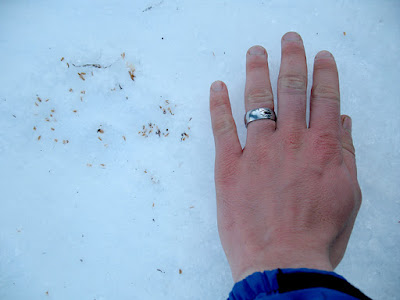
Here Kyle closely inspects a trail we discovered at end of our day. We had talked about the mysterious grasshopper mouse earlier in the day, and then came upon this... This trail did not seem to match anything we had seen that day. It was a pretty odd gait for such a small mammal, a lot of walking and trotting. This animal went from cover to cover, then started wandering around in the semi-open as if foraging. Perhaps it was hunting?

Had we seen the elusive grasshopper mouse?

We left with that trail as a mysery, having been satiated on plentiful tracks and sunshine.

As we headed home, the fading light glowed behind Mt. Rainer...


We are all looking forward to another outing with Alderleaf Tracking Apprenticeship!

March 23, 2010

Rock Boiling: Survival Water Purification


Using a rock boiling technique to purify water at our Weekend Wilderness Survival Course.

This is a way to effectively purify water in a survival situation if you did not have a filter system or chemical treatment. The containers are coal-burned bowls made from logs. It is a completely primitive technique that requires no specialized equipment.

The little scrubby made from an evergreen tree branch is used to wipe off ash off of the hot stones. The first bowl of water (not for drinking) is for dunking to get off the remaining ash. Too much ash in water is not good to drink.

The second bowl of water is being boiled. Once the water reaches boiling temperature it is safe to drink. When the water begins to cool we add pine needles to add good flavor and vitamin C.

March 4, 2010

February at the Certification Program

Another jam-packed month at Alderleaf has come and gone. Signs of spring are appearing all over campus. The voices of birds grows louder everyday. Frogs singing in the evenings and buds are popping all over the place. Even the first bumble bees of spring have made an appearance!


The month of February has been an exciting one for the Alderleaf Wilderness Certification Program. We have continued forward on our learning journey and covered a lot of new ground. Students did everything from making cattail mats and soothing cottonwood salves with Karen Sherwood, to practicing making primitive survival traps with Jason Knight.

One day we had guest instructor Dave Scott come in and teach about the amazing world of bird wings and feathers, their functions, and how to identify them using a several teared method.


On another great day students learned about and experienced the practices of habitat restoration and forest stewardship. Native plants were added to the native restoration area at the entrance to the farm. Also, students got to plant between 150 and 200 small Douglas firs and western red cedars as part of the stewardship process in the wooded areas of the property. Thus, encouraging our forests to move towards the complex and diverse structure that mirror the old-growth.


While learning more about primitive living and survival skills, students spent another day learning a variety of methods for water purification. The oldest and one of the simplest forms is through boiling the water to destroy any potential parasites. But first, you have to make a container! There in lies the need to create bowls via burning with coals from the fire. Here Certification Program student Greg Evans demonstrates the technique.


During a 3 day permaculture session with instructor Adam Rawson, students had an opportunity to look at the idea of building from a new perspective: biotecture! Biotectures are living structures that come in many forms. The class worked on creating a living structure out of young alders, which will provide a gathering space for guests and future classes. As the alders grow, they will be encouraged to grow together and form a living roof which might someday even be tight enough to keep out the winter rain!


The shortest month of the year is over, but March has arrived and the adventure and learning continues!

Come visit our blog soon for more updates.

February 4, 2010

More Highlights from January 2010: The Winter Trip

The winter trip was an exciting week that ended the first semester of the 2009-2010 Wilderness Certification Program. We stayed in a beautiful location near the Methow Valley of North central Washington.


The week began with students making a variety of snow shelters to sleep in for the week. Greg G. and Tim D. are working on a quinzee snow shelter in the top photo. The second photo shows another quinzee being worked on by Kelley G. and Matt E.


Here is Kelley demonstrating a different kind of shelter. This is an emergency shelter than can be made in 30 minutes or less, called a "down and out" shelter.


On this trip, students also made primitive snowshoes out of willow boughs. Here AWCP student Jason M. teases the frame gently into the proper shape. It takes patience and a steady hand, but thankfully willow is more forgiving than other types of wood.


Overall an amazing week in a beautiful place. Some of us even had an opportunity to hear wolves howling and great horned owls serenading in the evenings. We look forward to another trip to the North Cascade Mountains with next year's class!

Highlights from January 2010 AWCP

January has been a busy month at Alderleaf with the Wilderness Certification Program. Here are a few of the highlights:


Students spent a day with Karen Sherwood working on making pine needle baskets by hand. Here is Nick Laptew working on his basket above.


On another day we worked with Frank Sherwood on making and using primitive longbows. Look at the arrows fly out of the bows of AWCP students (from left to right) Alex, Keith, Tim, Shea, and Justin!


Here Frank instructs AWCP student David on proper technique for how to draw the bow and focus the attention.


Later, students spent another fun day learning from instructor Allan "Hawkeye" Sande about emergency shelters. In this case, one made from a poncho. The day included many other shelters as well as more opportunities to practice teaching/mentoring skills with the experienced coaching of Allan.


To be continued...

December 31, 2009

AWCP final week before the holiday break

Before the Wilderness Certification Program students took a break for the holidays, we finished up with a jam packed week of fun. This included advanced firemaking skills, making fire from scratch. This time, students had to gather wild materials and try to create a friction fire totally from scratch. No saws or hatchets allowed! It was a wet, rainy day and made it especially challenging.

Also, we had another wonderful day with Karen Sherwood, this time learning about decoctions and infusions. We started our day finishing up the process of making our tinctures. They had been saturating for weeks, and were now ready to be finished.

First students filtered out the solids from liquids.


Then, we bottled them up and shared. Just in time too, as many people were starting to feel the onset of colds! Everyone felt grateful for the medicine provided by red ceder, yarrow, and Oregon grape.


We also made teas and infusions with various wild plants, including a dark, rich, coffee-like drink from the long tap root of the burdock. Here are Keith and Jason Millhouse processing the root before we roasted it.


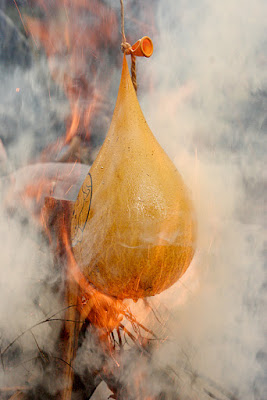
The final day was a very special day for the students, full of naturalist challenges and games. Groups of students got into some friendly competition in trying to see who could build a friction fire first and make it large enough to pop the water balloon hanging above.


Students worked quickly, and persevered despite the abundant moisture that day.


We also played a great blindfolded game with the entire class called Nutty Squirrels, involving teams of 2. One student would be blindfolded, while the other would steer him or her into "battle." No word-based communication was allowed, only gestures or sounds. The ammunition was "acorns" in the form of balled up socks.

Great hilarity quickly ensued...

What a way to end before our winter break!

December 19, 2009

Video clips from the Tracking Apprenticeship

Here's a couple short clips showing a few of the animal tracks & signs we found during our December field day at the Wildlife Tracking Apprenticeship:


December 14, 2009

Winter Adventure with the Wildlife Tracking Apprenticeship

Another spectacular outing with the Wildlife Tracking Apprenticeship ends, and with it that last tracking outing of 2009.

This trip took us out to explore a new location over Stevens Pass and onto the East slope of the mountains. We had set our sights on the possibility of wolverine tracks and found ourselves exploring with new eyes. It did not take us long to find an interesting set of tracks crossing a road in the snow.

From Tracking Apprenticeship Winter Outing


These tracks moved around in loping gaits typical of many members of the weasel family. The tracks above are those of a large American marten. Following the tracks of this animal led us to find many other interesting tracks such as those of ruffed grouse, short-tailed weasel, Douglas squirrel, deer mice, bald eagle, river otter, beaver and others.


From Tracking Apprenticeship Winter Outing


The winter landscape itself was absolutely incredible to behold. Frost formed fantastic shapes on the top of the frozen waterways we crossed and re-crossed. It was towards the tail end of our adventures, following tracks near the edge of a large meadow that we discovered something odd.

From Tracking Apprenticeship Winter Outing


We picked up a strange trail made of very worn, over-sized tracks. We debated exactly what sort of gait we were looking at and what animal made it. We considered that perhaps this was the wolverine tracks we had set out to see.

From Tracking Apprenticeship Winter Outing


We followed the trail as far as we could and found a few tracks that showed subtle toes. Four toes, and a blocky looking heel pad. After much pondering, we came to the agreement that it was most likely tracks of another rare species in these parts... a Canada lynx.

What a day! Looking forward to more tracking in the new year.

November 18, 2009

Alderleaf interviewed by "From Soil to Soul"

New video interview with Alderleaf - put together by Charlie B of "From Soil to Soul", a youtube channel dedicated to all things local and sustainable in the Pacific Northwest!

November 14, 2009

Camping Trip to the Eastern Washington Desert

On the first day of our camping trip we stopped at Umtanum Canyon to harvest materials for hand drill fire kits. In addition to learning about the best materials to use, we were able to observe a much different environment than on the Western side of the Cascade mountains. Students found signs of deer, Big-Horned sheep, beaver, Golden Eagles, porcupine, and many other species of animals.


Here Jason is explaining what to look for in Cottonwood roots and branches to make good fireboards for our Hand Drill kits.

We learned more about traditional uses of the land at the Yakima Indian Reservation Cultural Center Museum on the way to our campsite.


Here students are putting their knowledge of fire building into practice to build the fire up in camp. The fire not only serves as a source of heat, but a central place for all to gather around in community to reflect upon the day.

After a cold night, we woke up to frost. Many of us learned a valuable lesson about cold weather camping. After some modifications, such as using leaves as insulation under tents, most had a much warmer second night of camping. We then proceeded to Moses Lake sand dunes to study the desert ecology of the Northern Great Basin Desert.

On our final day we explored the Ginko Petrified Wood State Park as well as harvesting the long needles from the Ponderosa Pine for a class on basket making later in the semester. The trip was capped off by a snowstorm in the Cascade Mountains on the way home. We were able to put the knowledge of traditional ecological living that we have learned so far into practice on this trip. It was a good week.

November 9, 2009

Flintknapping, Baskets, Tinctures and Bird Communication

We jumped into the 1st week of November with a day working on the art of flint-knapping, with the guidance of the very experienced and skilled Frank Sherwood.

From Flintknapping, Cedar Baskets, Tinctures and Shapes of Alarm


Students learned the various techniques of knapping such as shearing, pressure flaking and alternate flaking. Here the students work in a very focused manner on alternate flaking.

From Flintknapping, Cedar Baskets, Tinctures and Shapes of Alarm


The other half of the class also had the great pleasure of working with Karen Sherwood on cedar baskets.

From Flintknapping, Cedar Baskets, Tinctures and Shapes of Alarm


Here are some of the students showing of their progress.

From Flintknapping, Cedar Baskets, Tinctures and Shapes of Alarm


We worked the next day with Karen on learning all about the power of healing herbs. We created a tincture of oregon grape, cedar and yarrow. It was wonderful connecting more deeply with the healing herbs all around us.

Finally, we finished of our week delving into deeper into the mysteries of bird communication. We looked at how birds can tell us about what sorts of animals are moving around us that we might not notice otherwise. We also looked more closely at how predators affect bird behavior and what we can learn from birds about those predators.

From UBNA Adventure Nov. 16


Another awesome week with the AWCP!

November 2, 2009

Alderleaf jaunt to NW TREK

On Friday, Oct. 30 the Alderleaf crew headed down to NW Trek for a visit. We broke up into several groups and cruised around looking at the diversity of wildlife found in the park. All of the animals found there are native to the greater Northwest bio-region. This was an opportunity for students and staff alike to observe animals closely and learn how they move through the landscape, how they interact with each other, what types of sounds they make, how they smell and much more.

From Northwest Trek with Alderleaf


It was wonderful to get to watch such elusive animals as wolverines up close and personal. This beautiful animal was a great surprise to see, as it was a new cub born to the mating pair of wolverines found at the park. This species is known to cover vast tracts of wilderness in its search for food.

In this same section of the park, there is also a pair of fishers. Fishers were recently reintroduced to Olympic National Park. These animals are, like the wolverine, members of the weasel family (Mustelidae) and are very capable predators.

From Northwest Trek with Alderleaf


Similar in size to river otters, fishers - despite their name - are not generally fishing for food. Instead, these creatures hunt in forests on the ground and are also incredibly skilled and fast in the trees. Fishers have ankles that can rotate backwards, allowing them to climb down trees head first. They are also one of the only animals known to regularly prey on porcupines.

The park also has a several hundred acre enclosure that includes many ungulate species such bison, elk, moose and bighorn sheep. Also, they house a variety of native birds of prey including several types of owls, as well as bald eagle and golden eagles.

From Northwest Trek with Alderleaf


We were informed by one of the keepers that the pair of golden eagles are some of the oldest animals housed at the park. They were acquired some 30+ years ago and already at that time the birds were mature. This would put them some were between 35 and 40 years old!

The park staff also did some animal displays outside of enclosures and allowed us to view several species including a western screech owl, great horned owl, spotted owl and beaver at very close range.

The day left us inspired and wanting to know more. We look forward to another visit to NW Trek in the future!