December 14, 2009

Winter Adventure with the Wildlife Tracking Apprenticeship

Another spectacular outing with the Wildlife Tracking Apprenticeship ends, and with it that last tracking outing of 2009.

This trip took us out to explore a new location over Stevens Pass and onto the East slope of the mountains. We had set our sights on the possibility of wolverine tracks and found ourselves exploring with new eyes. It did not take us long to find an interesting set of tracks crossing a road in the snow.

From Tracking Apprenticeship Winter Outing


These tracks moved around in loping gaits typical of many members of the weasel family. The tracks above are those of a large American marten. Following the tracks of this animal led us to find many other interesting tracks such as those of ruffed grouse, short-tailed weasel, Douglas squirrel, deer mice, bald eagle, river otter, beaver and others.


From Tracking Apprenticeship Winter Outing


The winter landscape itself was absolutely incredible to behold. Frost formed fantastic shapes on the top of the frozen waterways we crossed and re-crossed. It was towards the tail end of our adventures, following tracks near the edge of a large meadow that we discovered something odd.

From Tracking Apprenticeship Winter Outing


We picked up a strange trail made of very worn, over-sized tracks. We debated exactly what sort of gait we were looking at and what animal made it. We considered that perhaps this was the wolverine tracks we had set out to see.
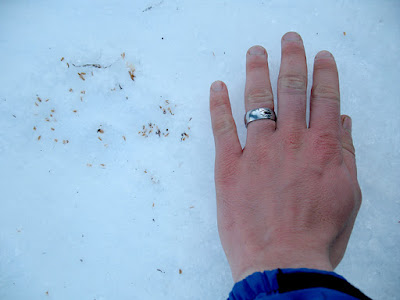
From Tracking Apprenticeship Winter Outing


We followed the trail as far as we could and found a few tracks that showed subtle toes. Four toes, and a blocky looking heel pad. After much pondering, we came to the agreement that it was most likely tracks of another rare species in these parts... a Canada lynx.

What a day! Looking forward to more tracking in the new year.

November 18, 2009

Alderleaf interviewed by "From Soil to Soul"

New video interview with Alderleaf - put together by Charlie B of "From Soil to Soul", a youtube channel dedicated to all things local and sustainable in the Pacific Northwest!

November 14, 2009

Camping Trip to the Eastern Washington Desert

On the first day of our camping trip we stopped at Umtanum Canyon to harvest materials for hand drill fire kits. In addition to learning about the best materials to use, we were able to observe a much different environment than on the Western side of the Cascade mountains. Students found signs of deer, Big-Horned sheep, beaver, Golden Eagles, porcupine, and many other species of animals.


Here Jason is explaining what to look for in Cottonwood roots and branches to make good fireboards for our Hand Drill kits.

We learned more about traditional uses of the land at the Yakima Indian Reservation Cultural Center Museum on the way to our campsite.


Here students are putting their knowledge of fire building into practice to build the fire up in camp. The fire not only serves as a source of heat, but a central place for all to gather around in community to reflect upon the day.

After a cold night, we woke up to frost. Many of us learned a valuable lesson about cold weather camping. After some modifications, such as using leaves as insulation under tents, most had a much warmer second night of camping. We then proceeded to Moses Lake sand dunes to study the desert ecology of the Northern Great Basin Desert.

On our final day we explored the Ginko Petrified Wood State Park as well as harvesting the long needles from the Ponderosa Pine for a class on basket making later in the semester. The trip was capped off by a snowstorm in the Cascade Mountains on the way home. We were able to put the knowledge of traditional ecological living that we have learned so far into practice on this trip. It was a good week.

November 9, 2009

Flintknapping, Baskets, Tinctures and Bird Communication

We jumped into the 1st week of November with a day working on the art of flint-knapping, with the guidance of the very experienced and skilled Frank Sherwood.

From Flintknapping, Cedar Baskets, Tinctures and Shapes of Alarm


Students learned the various techniques of knapping such as shearing, pressure flaking and alternate flaking. Here the students work in a very focused manner on alternate flaking.

From Flintknapping, Cedar Baskets, Tinctures and Shapes of Alarm


The other half of the class also had the great pleasure of working with Karen Sherwood on cedar baskets.

From Flintknapping, Cedar Baskets, Tinctures and Shapes of Alarm


Here are some of the students showing of their progress.

From Flintknapping, Cedar Baskets, Tinctures and Shapes of Alarm


We worked the next day with Karen on learning all about the power of healing herbs. We created a tincture of oregon grape, cedar and yarrow. It was wonderful connecting more deeply with the healing herbs all around us.

Finally, we finished of our week delving into deeper into the mysteries of bird communication. We looked at how birds can tell us about what sorts of animals are moving around us that we might not notice otherwise. We also looked more closely at how predators affect bird behavior and what we can learn from birds about those predators.

From UBNA Adventure Nov. 16


Another awesome week with the AWCP!

November 2, 2009

Alderleaf jaunt to NW TREK

On Friday, Oct. 30 the Alderleaf crew headed down to NW Trek for a visit. We broke up into several groups and cruised around looking at the diversity of wildlife found in the park. All of the animals found there are native to the greater Northwest bio-region. This was an opportunity for students and staff alike to observe animals closely and learn how they move through the landscape, how they interact with each other, what types of sounds they make, how they smell and much more.

From Northwest Trek with Alderleaf


It was wonderful to get to watch such elusive animals as wolverines up close and personal. This beautiful animal was a great surprise to see, as it was a new cub born to the mating pair of wolverines found at the park. This species is known to cover vast tracts of wilderness in its search for food.

In this same section of the park, there is also a pair of fishers. Fishers were recently reintroduced to Olympic National Park. These animals are, like the wolverine, members of the weasel family (Mustelidae) and are very capable predators.

From Northwest Trek with Alderleaf


Similar in size to river otters, fishers - despite their name - are not generally fishing for food. Instead, these creatures hunt in forests on the ground and are also incredibly skilled and fast in the trees. Fishers have ankles that can rotate backwards, allowing them to climb down trees head first. They are also one of the only animals known to regularly prey on porcupines.

The park also has a several hundred acre enclosure that includes many ungulate species such bison, elk, moose and bighorn sheep. Also, they house a variety of native birds of prey including several types of owls, as well as bald eagle and golden eagles.

From Northwest Trek with Alderleaf


We were informed by one of the keepers that the pair of golden eagles are some of the oldest animals housed at the park. They were acquired some 30+ years ago and already at that time the birds were mature. This would put them some were between 35 and 40 years old!

The park staff also did some animal displays outside of enclosures and allowed us to view several species including a western screech owl, great horned owl, spotted owl and beaver at very close range.

The day left us inspired and wanting to know more. We look forward to another visit to NW Trek in the future!

October 20, 2009

Mushroom Madness: Wild Mushroom Identification Class

The September 26 wild mushroom identification class went beautifully! Over 20 people from the public came to join us to learn, seek out and celebrate wild mushrooms. The weather was most helpful, with plentiful rain coming down in the earlier part of the week. Just to the liking of many mushrooms. On the day of class we were blessed with sunshine.

From Mushroom Class at ALDERLEAF


During our field portion we found a rich and diverse abundance of species. This included some tasty wild edible species such as chanterelles, crack cap boletus and oyster mushrooms. Everyone jumped in on looking for the mushrooms and we even discovered several previously unknown patches of chanterelles. We harvested them, and cooked them up using the dry-sautee method. For more information on this, check out our Alderleaf Commons site here: http://wildernesscollege.ning.com/group/mushrooms/forum/topics/cooking-mushrooms-the-dry

From Mushroom Class at ALDERLEAF


As you can see from the expressions in this photo, the students at the class were very intent on the cooking process. We ended the day with a wild mushroom feast that gave everyone an opportunity to taste their catch of the day.

The day was amazing, and everyone who attended left for home with a new appreciation and inspiration for wild mushrooms. Even the instructor...

From Mushroom Class at ALDERLEAF

October 19, 2009

October 2009 Update

October has been a busy month at Alderleaf. Here's some photos to illustrate a few of the things we've been up to:

The Wilderness Certification Program students learned about stone tool making. This photo shows a few of the hand-crafted stone knives they created.

Two ponds have been created as part of Alderleaf Farm's Permaculture Plan. The ponds will create a greater diversity of habitats on the farm, attract more wildlife, solve winter flooding problems, store water for garden use, and provide the opportunity to raise fish! The pond is just starting to fill with water now that the rains have returned.

Alderleaf instructor Filip Tkaczyk, taught several wild mushroom foraging classes in September and October. They were a ton of fun - many tasty treats were discovered in the forest.

The Wilderness Certification Program just returned from their annual field trip to the Oregon Dunes. We had some inclement weather this year, though the coyote, fox, and raccoon trailing was amazing on our final full day in the field. Other highlights - harvesting 40 cups of evergreen huckleberries, and of course, jumping off the huge dunes!

September 23, 2009

Outdoor Classroom Completed!

After much effort on the part of Alderleaf residents, students, staff, and community; the outdoor classroom is now completed! It provides a much needed outdoor learning space that is dry and out of the rain. The hand-crafted cedar posts and cedar shakes turned out beautifully. Its quite a sight! Much thanks to all that contributed. We hope it serves the community for many years to come!

September 20, 2009

2009-2010 Wilderness Certification Program Begins!

The 2009-2010 Alderleaf Wilderness Certification Program kicked off on Wednesday with orientation day! Thursday was an introduction to nature studies / naturalist skills. Friday began wilderness survival training with debris hut shelter construction and bow drill fire making. Lots of first time bow drill fires!

Intern, Kyle, offering bow drill fire making tips to Greg

September 13, 2009

Wildlife Tracking Apprenticeship Adventures!

This Saturday was the start of another year of the Wildlife Tracking Apprenticeship at Alderleaf. It was an amazing day of tracking along the Snohomish and the Skykomish Rivers. We observed a long list of species and their tracks including mink, muskrat, Norway rat, great blue heron, turkey vulture, bullfrog, raccoon and many others. As we traveled from one amazing set of tracks to another, we picked up the relatively fresh trail of a pair of elk. We trailed them over sand, silt, mud, gravel and even through water!

From Wildlife Tracking Apprenticeship Day 1


As we covered ground, we came upon more and more amazing sights. It was at the end of the day that we had the greatest treat of all... Two ospreys on the ground and in the water! Osprey are on the ground only extremely rarely, and when we saw them take off we ran over to take a look. What we found was so amazing it was almost like finding the tracks of a mythical creature! The tracks were so strange... the contortions made by the toes and talons in order to allow this bird to walk are amazing and extreme. It is a great demonstration of how strongly adapted this bird is to catching fish.

From Wildlife Tracking Apprenticeship Day 1


We found the trails of both birds. Both landed on the silty bar sticking out in a slow stretch of river, and walked rather awkwardly into the water to bath.

From Wildlife Tracking Apprenticeship Day 1


You can see in this photo how the tracks lead into the river, and how they one nearest the water is the drag marks left behind by the one of the birds tails.

Overall all, it was a fantastic day of adventure with the Wildlife Tracking Apprenticeship!

August 17, 2009

A Feast of Wild Edible Plants!

We had a great Wild Edible Plants Course this last weekend! Slideshow on wild edible plants, plant identification hike around the 15 acres, and then harvesting and cooking in the afternoon. By the end of the day an entire meal was created with wild edibles from the Alderleaf land:
Stir fry from dandelion roots and stinging nettle leaves; a salad made of red clover flowers, dandelion greens, and sheep sorrel; and a dock seed/wild berry oatmeal made with red huckleberries, blue huckleberries, and blackberries - topped off with rose hip honey.
Our wild and highly nutritious allies provide sustenance in both our kitchens and in survival situations.

There's still a few spaces open in the upcoming Wild Mushroom Identification Class.
Learn how to forage for wild edible mushrooms!

July 30, 2009

Transforming the Outdoor Teaching Area!

Staff, interns, and volunteers have been improving the outdoor teaching area by building an eight-sided roof over the fire pit! The posts were split from the cedar trees that came down on our land this past winter. Here's some photos showing our progress thus far:

Finished putting in the rafters and benches on Thursday!

This is what the area looked like before construction began.

First the cedar posts were put in the ground.

Then we used scaffolding to put up the smoke hole and first rafters

Smoke hole from below

Another view of the smoke hole

Next we'll be putting up more supports and then the cedar shakes that we hand split from our own trees!

Its been a blast working together! Big kudos out to Zach, Shea, Steve N., Tracy, Steve B., Filip, Kerry, and Kyle! Looking forward to the next phase of construction!

July 15, 2009

Run-in with a Bear Family

It has been a month since we finished the Alderleaf Wilderness Certification Program and the skills I have learned helped me come across a family of black bears last week. I was on a hike to the lakes that I have been to numerous times now. My friend and I were fox walking on the logging road in our attempt to catch glimpses of the summer birds. He hadn't seen a Swainson's thrush ever and was very intent on seeing one. We heard a stick break about fifty feet ahead and stopped dead in our tracks to see a bear cub, probably around 6 months old, pop out onto the road and playfully lope down the road away from us. After a fist pound and a "heck yeah" we witnessed another bear cub jump out of the salmonberry thicket along the road. He was more wily than his sibling because he stopped, looked at us, sniffed the air, and jumped back into the thicket. He then gave a bellow which mom responded to with a growl and 2 huffs.

At this point my friend turned to run, which I quickly stopped. Mom began walking toward us without revealing her full body. We only caught a glimpse of her back as she tromped through the thicket in our direction. We slowly walked backward and after about 100 feet on our trail she returned to her one cub who stuck with her.

We ended up going a different way to the lakes but got on the same logging road in the other direction on our way home. We saw a bear cub once again walking toward us in a playful manner. Our theory is that the first bear got separated from the family during our encounter 4 hours prior. We walked the rest of the way home with senses heightened, excited to tell our story to all of the Alderleaf residents.

The strangest part of this whole story is that the night before this hike I had a dream. In the dream I saw a baby black bear climb down a tree. Upon my inspection mama came out and growled at me. I slowly backed away and began walking back toward the main trail and she followed peacefully. People walked by me on this trail and said hello, none observed the bear at my side. We walked into a dimly lit tunnel and I turned around to see if the bear had come in. She had shape-shifted into an old man that mildly resembled the musical artist Sting. I said "Bear?" And the old man replied "it is me, I am with you." At that point I awoke. My dream had come true!

The lesson here, for me, is that dreams are more than just sub-conscious experiences. If we pay attention to our dreams they may guide is in one or more ways through our next day. They may teach us how to overcome an obstacle in our lives whether it be a life-long fear or simply deciding which direction to go at a fork in the trail. Happy hiking and happy dreaming everyone.

June 9, 2009

Wilderness Certification Program Graduation!

The 2008-2009 Wilderness Certification Program students graduated on Saturday, June 6th!

Congratulations to the recent graduates!

presenting certificates

students and staff speaking at graduation

student projects on display at graduation

June 5, 2009

We need more Baby Birds! (AWCP Survival Trip)

Our last field trip together was the AWCP's final exam: 5 day wilderness survival. We forged across a rushing stream to an island somewhere on the snaking Skykomish River. Day one was spent finding a campsite, building the best debris tipi we have ever seen, and making the fire. We found ourselves on the north side of the island, at the edge of the mixed forest. Dixie went to work building the bow and drill fire kit from the aged cedar that Jase had found on our hike. The three of us guys built the shelter. We lashed the ridge poles together with a zipper I had found hanging on a salmonberry bush. Our main source of debris for the insulative wall was an exotic invasive bush called Japanese Knotweed. We put about 800 pounds of this stuff on our shelter to create a 2 foot thick wall all the way around it. The gaps we filled in with sword ferns. Dixie was tirelessly working on a coal when she decided it was time to rest and asked me to bust one out. I got one and we placed it in a giant "bindle tunder" of shredded cottonwood bark; then the gal blew it into flame. We had fire by 4 pm.

Jason Cameron brought back something that made our lives extremely easy for the rest of the trip. He harvested a cooking pan about 3 inches deep by 14 inches wide. We went and gathered some stinging nettle and salmonberry chutes for our first dinner. Little did we know that we would be eating nettles and chutes for every single meal the next 4 days. On day 2 we got out of the shelter which needed more patchwork and made some fir needle tea (I call it Emergen-fir). The vitamin C rich beverage was not only soothing but medicinal to our food deprived stomachs. Jase raided a Towhee nest and got one egg for each of us to put in our nettle stew, but the eggs were already fertilized. We began the day by eating featherless baby birds. To much surprise, it was a very tasty morsel.

The rest of the week was spent gathering water and firewood, foraging for our next meals, hunting (unsuccessfully), and resting. The closest I got to a good hunt was hitting a flying merganser in the wing, knocking her off course a bit but not dropping her in the water. I threw so many stones and sticks at birds that week my shoulder is still aching. Our diet was mostly vegetarian, and every meal was a stew. We ate nettles, salmonberry chutes and flowers, thimbleberry flowers, trailing blackberry flowers, fireweed, oxeye daisy, coltsfoot, plantain, dandelion, sheep sorrel, oyster mushrooms, oregon grape chutes and more. The meat we dined upon consisted of garter snake, alligator lizard, gnat, worm, and snail... so many snails! They began to taste good after about 4 of them. The common mantra, however, thanks to Dixie (the predator) became "we need more baby birds," accompanied by a fizzing drool from each of our mouths.

There were many things we learned about wild animals, hunter- gatherer cultures, and most importantly, ourselves on this survival trip. I feel like more of a man for doing it and still have my stone knife that helped so tremendously throughout the week. Dixie brought back our fire kit and each one of us brought back a great story and many lessons. We were forced to apply the things we had learned over the last three seasons and we did it well, without getting sick or starving. What a way to end the school year!

Elk Trailing Seaweed Teachings

The week before our final trip was one of my favorites this year at the Alderleaf Wilderness Certification Program. On Wednesday we went to Three Forks natural area in North Bend to practice our trailing skills. We started the day finding a wild cucumber plant which we later learned is poisonous... darn. We traversed through one meadow and at its edge picked up a fresh elk trail. The heavy rains the day before were a tremendous help in differentiating fresh from old sign. We jumped on the trail at around 10 am, followed it across a small wooded stream into another meadow, where we found lays in the ever-growing reed canary grass. We lost the trail after the beds so we skirted the edge of the meadow until we picked up the tracks again entering the muddy maple/cottonwood forest. Each of us took turns taking the lead and stayed on it for 3 more hours, skipping lunch. We began to see large amounts of hair stuck to snowberry branches and as Dixie led us around a corner the butt ends of the spooked Rocky Mountain Elk left our field of view as they trodded off loudly through the woods. We did it! Found em' baby. I'm ready for a cougar now... well, maybe.

Thursday Karen Sherwood of Earthwalk Northwest came out and taught us about the botanical gifts the sea has to offer us. We learned that Nori, an edible seaweed, actually grows all along the west coast. We were all under the impression that it only grew in the Asain pacific parts of the world. We also learned that nearly every seaweed found in the tidal waters is edible, except for one kelp species named acid kelp. This is distinguished from others by its flattened laminae (leaf like blades) which are segmented and bleach out acidic liquids onto things they touch. Other edibles we learned about were Rockweeds, Sea Lettuces, and Kelps. She also taught us about which tidal zones each one inhabits.

On Friday we were put on the teaching stage at OWLE, a seasonal children's class offered by Hawkeye at his school, Quiet Heart. We used all of the tools he had given us throughout the year to teach lessons of animal movements, awareness, and camoflauge. By the end of the day the 13 kids we taught were covered in clay, mud, charcoal, Pine needles and grasses. It was a very fun experience and we learned that keeping control over a group of young people can require much more energy than expected. All in all it was a good learning and teaching experience.

Rainy nights, Scouts all right

It has been a while since I have been able to write about the Alderleaf Wilderness Certification Program. But at the beginning of May we went to the Okanogan to learn the ways of the scout. Scouts were very important members of native communities and were relied upon to gather information, find camp sites and hunting/fishing grounds, or to find enemy tribes in the area. We were taught numerous ways that scouts move through the landscape to remain invisible. We also learned about natural camoflauge, booby traps, and reconasaince. We learned that the rain makes it much easier to move silently, not only pitter pattering the trees, but moistening and softening the ground so leaves don't crunch under your feet... or knees... or stomach for that matter.

I will not go into detail because the scout community is a tight one, and under scouts honor we agreed to keep the deeper lessons within our tribe. I will say, however, that at Scout Camp you recognize the difference between comfort and need; and, for you brave souls who choose to participate, your boundaries and limits will be tested...

June 1, 2009

Photos from May!

Students learning natural camouflage at the Scout Skills Intensive

Rubber boa found at the Scout Skills Intensive!


Wilderness Certification Program students visited the Bullock's Permaculture Homestead on Orcas Island, as part of completing their Permaculture Design Certificate coursework


Grouse that visited Alderleaf

Wilderness Certification Program students successfully followed elk tracks all the way to the animals!

Certification Program students teaching kids about natural camouflage


OWLE students in camouflage


Cougar tracks found during the Wilderness Certification Program survival trip

Wilderness Certification Program students returning from their end of the year Survival Experience!